
A Solstice Reflection on Darkness
After a year in the dark, in a way of speaking

I saw darkness in a new light this year.
It happened this fall as I was reading a description of darkness by Elizabeth Barks Cox, in her book Reading Van Gogh: An Amateur’s Search for God.
Cox relates a story by Rainer Maria Rilke called “A Story Told to the Dark.”
The story begins, Cox writes, “with a description of evening, of dark coming into the smallest corners of the room, and everything in the room (chairs, tables, windows) beginning to act ‘as though they had never known anything but twilight.’”
“In this quiet room the narrator felt that someone (some lost soul?) was asking him to tell a story, or maybe just the darkness itself wanted that story.”
So the narrator tells the story to the room, “only to the dark, to no one else ... to the only One who listens.”
Cox concludes:
“Attention to the vastness of night, and all that cannot be seen, becomes, in a sense, a losing and forgetting of ourselves in order to reflect on a different reality altogether. This kind of ‘finding’ can come through silent contemplation and even a different kind of listening for what is immediate and true. Without the silence and a connection to the interior self, our deep energy and sense of peace is lost, and we remain asleep in the world we know, without inklings of the world we do not know” (197).
Certain phrases and ideas in these passages stood out to me.
The notion of twilight entering that quiet room.
The vastness of night.
And I lingered over Cox’s subtle note that, in the darkness, I could speak honestly and quietly to “the only One who listens.”
I stopped writing for public consumption this year, for the first time in more than 23 years.
For more than two decades, I spent much of my life thinking about how to present things I found in my reporting, and sometimes my own thoughts, to others. In the summer of 2024, that began to stop even though I wrote a few more things and went on CNN once when Jimmy Carter died.
But it’s now been a full year of living, so to speak, in the dark.
Some people report feeling a sense of withdrawal after leaving journalism. They miss the daily adrenaline rush of the deadline, the challenge, the euphoric feeling of completion at day’s end, the dopamine rush of seeing your work immediately out in the world and receiving feedback.
Much of that lost its appeal for me years before I left journalism. The vice I could not shake was a perhaps naive idealism: the notion that if I could simply lay out the plain, cold hard facts, it would change things. The reality wore me down, and so for quite some time in the last few years, I tried to create some emotional distance between myself and the work.
A year in the dark has been a salve. I don’t need to share all my takes! That’s a great thing, for you and for me. I have read a lot of fiction this year. When I read Chris Moody’s mention of “reading purely for reading’s sake,” I knew both what he meant and what he was contrasting that with.
But my private moments in the literal dark, in the middle of the night, have also been altered.
I, like many, struggle with anxiety at times. It has ebbed and flowed over the past decade, with periods of intensity and periods of receding. When it has been bad, it has presented early in the morning upon waking. And, maybe related, I’ve sometimes woken up in the middle of the night with a sense of fear.
My early morning this fall were consumed — not with worries about our country’s future — but with detailed musings about the next practice I was going to run as coach of our 10-year old’s soccer team.
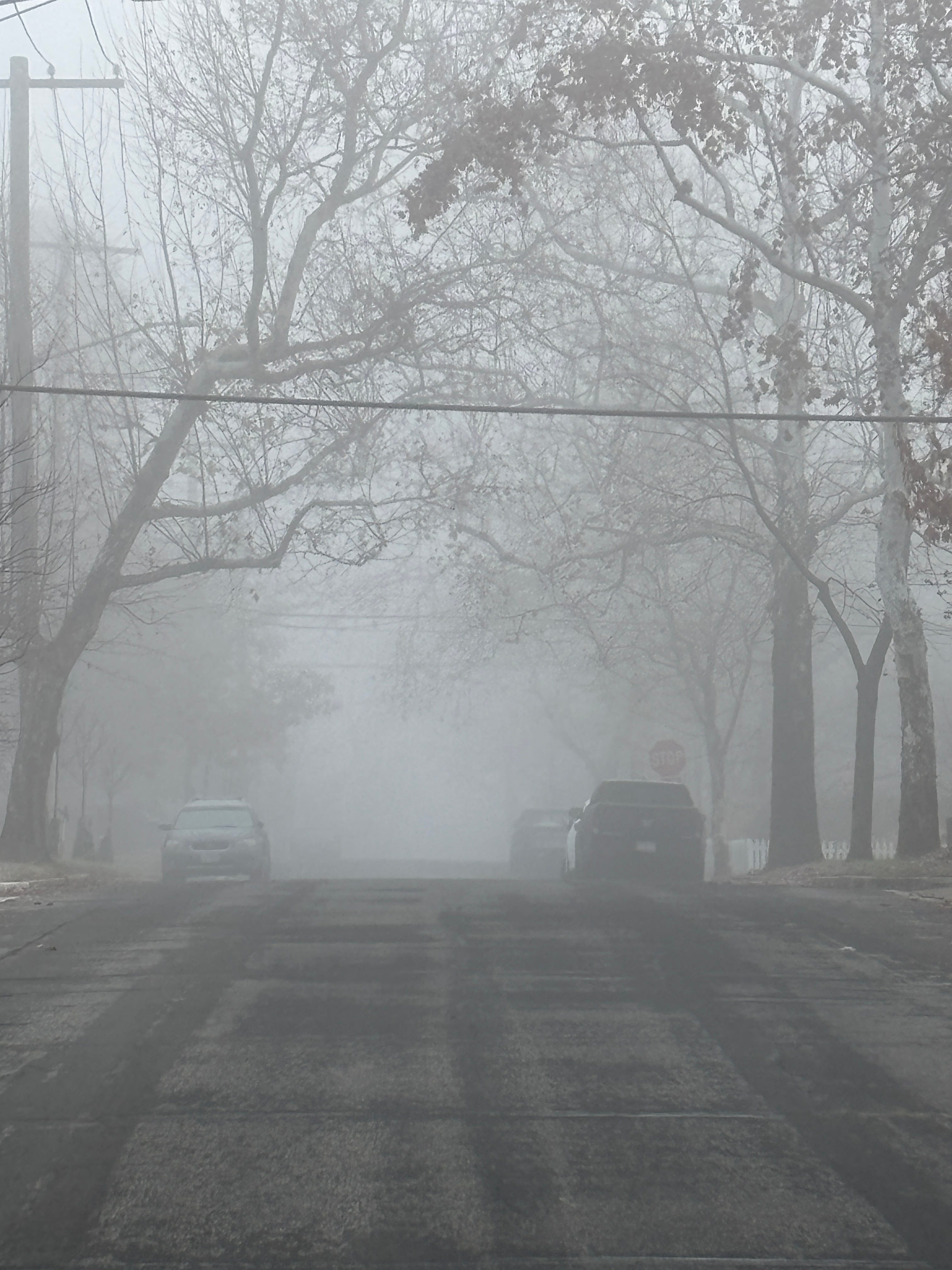
After I read those passages in Cox’s book, when I woke at 2 a.m. it began to be different. I started to have a sense that this vastness of night was not (only) a place for monsters but (also) a quiet refuge, where the one who really listens was present. And I suppose I was quiet enough, maybe, finally, to notice.
P.S. - I finished this short essay, logged on to Substack to publish it, and the first thing I saw was a post by my friends Michael & Melissa Wear promoting this:
A National Call to the Christian Practices of Silence & Solitude
In light of our current technological revolution
in the midst of great social distrust
in the shadows of profound political discord
we call on Christians
to take up the historic, Spirit-led practices of silence and solitude
as essential, formative disciplines for our time
so that we might grow in our capacity
to truly hear and pay attention to God and
to our neighbors and
resist the destructive and malformative habits of thought and behavior of our day.
Powerful ... as is what the Wears wrote about, which I hadn't seen. Thank you!